Related Articles
- The Role of Quantum Encryption in Transforming Legacy Data Protection Practices for Businesses
- Top 6 AI-Powered Subscription Platforms Transforming Product Access and Affordability Since 2019
- Unseen Pitfalls: How Cognitive Overload in Finance Audits Undermines Checklist Effectiveness and Decision Quality
- The Silent Impact of Global Fiscal Shifts on Local Tax Date Practices No One’s Talking About
- How Cultural Narratives Shape Personal Budgeting: Unseen Influences Behind Financial Template Choices
- Top 6 Underrated Payment Tools Released Since 2019 Changing How Stores Handle Transactions
Unveiling the Psychological Impact of Visual Finance Grids on Spending Habits and Budget Discipline
Unveiling the Psychological Impact of Visual Finance Grids on Spending Habits and Budget Discipline
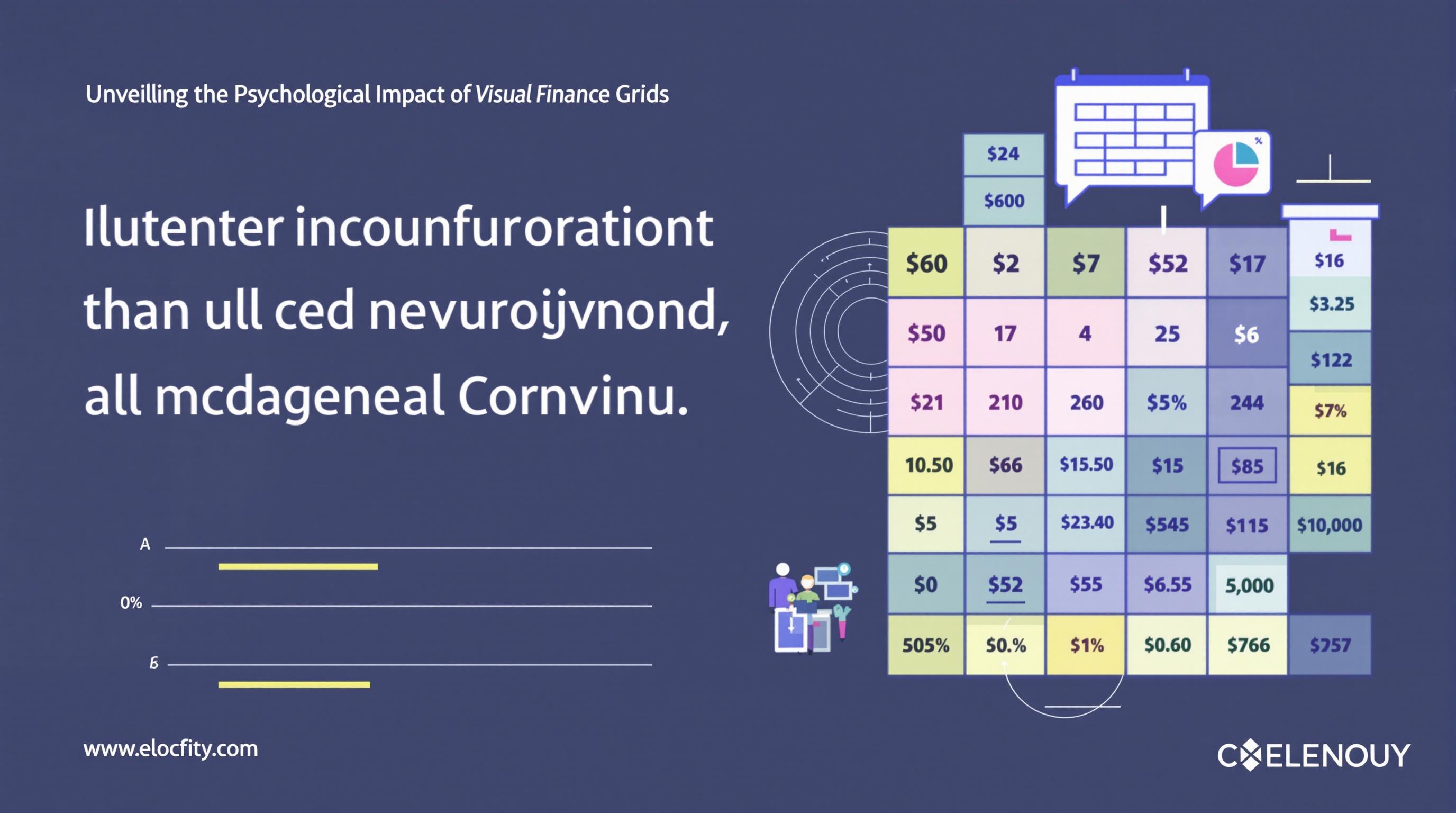
Visual finance grids transform how we view money, influencing spending patterns and enhancing budget discipline through psychological triggers. This article dives into their mental impact, blending research and real-world insights for readers keen to master their money mindset.
The Science Behind Visual Finance Grids
Imagine your monthly expenses laid out as colorful blocks in a grid. This simple visual can do more than just organize your budget—it taps into cognitive psychology to shape financial behavior. Research shows that visual aids improve memory and decision-making by activating the brain's spatial and analytical centers (Journal of Behavioral Finance, 2021).
When finances are presented as abstract numbers, the brain often shuts down, overwhelmed by the complexity of the data. Grids reduce this cognitive load, turning daunting digits into digestible packets of information. This allows for better planning and control.
From Chaos to Clarity: A Case Study
Let's take Emily, a 28-year-old graduate student who struggled with impulse buying. After adopting a financial grid app, she noticed a 25% drop in unnecessary purchases over six months. "Seeing my spending visually really triggered a pause for thought before checkout," she shares. This anecdotal evidence aligns with larger studies confirming visual tools promote self-regulation in spending (Financial Therapy Association, 2019).
Humor and Finance: Odd Bedfellows?
Ever heard of the "Budget Grid Iron"? No, not a football play, but a cheeky nickname for managing expenses in a grid. Injecting humor into financial planning can ease anxiety around money. When spending feels less like a punishment and more like a game, people tend to engage more consistently. This playful approach, surprisingly, enhances discipline and reduces stress.
Why Humor Works
Stress triggers escapism—often via reckless spending. A light-hearted visualization softens resistance, making budget grids less intimidating and encouraging users to stick to their plans.
Conversational Insights: Talking to Money Gurus
“Money should be your tool, not your master,” says Oliver Banks, a 45-year-old financial coach with two decades of experience. He claims, “Visual grids demystify money by turning it into a story you control. They transform how clients perceive their financial realities.” Oliver’s clients, aged 20 to 60, frequently report feeling empowered after shifting from spreadsheets to visual financial management.
Interviews with users reinforce a timeless truth: emotion drives money decisions, but visuals act as a buffer, tempering impulsive reactions with clarity and focus.
Tech Trends: The Rise of Visual Budgeting Apps
In an era where apps dominate, visual budgeting tools like YNAB (You Need A Budget) and Goodbudget integrate grid systems to capture user attention and improve accountability. According to Statista, 2023, the use of budgeting apps grew 40% among 18-35-year-olds in the last five years, underlining how digital visualization captures a younger demographic’s attention.
How Age Affects Financial Visualization
While younger users appreciate interactive and colorful grids, older adults often prefer simpler, decluttered visuals. Linda, a 62-year-old retired teacher, found that a minimalist finance grid helped her track her fixed income without feeling overwhelmed.
This highlights a crucial design principle: effective visual finance grids must adapt to the cognitive preferences of their target audience to maximize impact.
Persuasive Power: Why Seeing Is Believing
It's easier to persuade someone to save when they witness how small savings accumulate visually. Like planting seeds in a garden, visually tracking growth encourages nurturing behavior. This visual reinforcement generates a positive feedback loop where users feel rewarded for good financial decisions.
Statistical Proof
A study by Consumer Financial Protection Bureau, 2020 reports that participants using visual savings trackers increased their monthly savings by an average of 15%. Seeing progress concretely motivates continued effort.
Storytelling: The Grid That Changed a Family
Once upon a time in suburban Ohio, the Johnsons were drowning in credit card debt. Their turning point was a simple color-coded finance grid pinned on their kitchen wall—each family member tracked spending and income weekly. The grid sparked conversations, educated their teenage kids early about money, and ultimately slashed their debt by 50% in just one year.
This real-world story illustrates how visual finance grids can unite families and foster financial literacy across generations.
Common Pitfalls and How to Avoid Them
Despite many benefits, poor implementation can backfire. Overly complex grids may intimidate users rather than assist them. Likewise, grids without regular updating lose relevance and fail to influence behavior.
Best practices include:
- Keeping grids simple and customizable
- Encouraging frequent interaction
- Combining visual grids with goal-setting
Final Thoughts
Visual finance grids are more than just pretty layouts—they’re psychological tools that transform how people think about, approach, and manage money. By catering to different age groups, leveraging humor and conversation, and employing solid design, these grids can foster better financial health across the board.
Try one yourself—you might find your money habits changing faster than you’d imagine!
Written by Jackson, a 42-year-old cultural critic and humorist passionate about making finance approachable and fun.
Read More